Blackened trees stand against a pale clay floor, surrounded by towering orange dunes. At Dead Vlei in Namibia, the contrast is almost surreal. Yet this landscape is more than a striking photograph: it preserves evidence of a time when water reached a basin that is now exceptionally dry.
The trees are generally identified as camel thorns, a species that can survive in dry environments when sufficient water is available. Their story connects an intermittent river, migrating dunes, and centuries of limited decay. Understanding that sequence explains both why the trees died and why they remain standing.
How Dead Vlei Changed
Dead Vlei lies within the Namib Sand Sea, near Sossusvlei in Namibia's Namib-Naukluft Park.
Its pale clay pan is enclosed by immense dunes, creating a landscape that seems almost completely isolated from water.
But the basin was not always cut off.
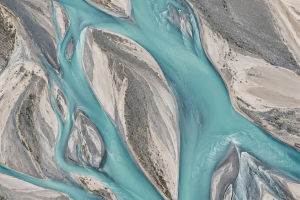
The nearby Tsauchab River is ephemeral, meaning it flows only when sufficient rainfall occurs in its catchment. In the past, water from this river system reached the Dead Vlei area.
That intermittent supply helped create conditions in which trees could establish and survive.
Their presence does not mean the entire Namib Desert was once forested. It shows that this particular basin once had a more favorable local water supply.
How Trees Could Grow There
Camel thorn trees are well adapted to arid landscapes. Their extensive root systems can access moisture that many other plants cannot reach.
Even so, they need sufficient water to establish and remain alive.
When the Tsauchab River system supplied Dead Vlei, occasional flooding and moisture stored beneath the surface could support tree growth.
The basin's clay-rich floor also records an environment where fine sediment accumulated during episodes of standing or slowly moving water.
Eventually, the balance changed.
As dunes encroached on the river system, water was increasingly diverted away from the basin.
Without adequate replenishment, the trees could no longer survive.
When the Water Stopped Arriving
The crucial change at Dead Vlei was not necessarily a sudden increase in dryness across the entire desert.
It was the interruption of the local water supply.
Wind-driven sand accumulation altered drainage routes associated with the Tsauchab River, eventually isolating the basin from the water that had sustained its trees.
Dating evidence discussed in the Namib Sand Sea's UNESCO nomination documentation places the abandonment of recharge at roughly 600 years ago.
That figure describes an environmental transition, not the precise death date of every tree.
Some individuals may have survived longer than others, depending on their age, root systems, and remaining access to moisture.
Why the Wood Has Survived
In many environments, a dead tree gradually collapses and decomposes as fungi, bacteria, insects, and weathering break down its wood.
Dead Vlei is different.
Extremely limited moisture restricts the biological activity responsible for much of that decomposition. The dry conditions have helped preserve the standing trunks for centuries.
Their dark appearance is commonly associated with prolonged exposure to intense sunlight and weathering, although color alone cannot establish a tree's age or preservation history.
Importantly, the trees are not petrified.
They remain preserved dead wood rather than fossils whose original material has been replaced by minerals.
Their persistence is remarkable, but not permanent: physical weathering can still damage them.
What the Pan and Dunes Reveal
Look beyond the trees, and two different landscape-forming processes become visible.
The pale pan records the accumulation of fine sediment in a low-lying basin that once received intermittent water.
The surrounding dunes reflect the movement and deposition of sand by wind.
These processes operated together over time.
Dunes may look immovable during a brief visit, but their surfaces and forms continue to change as winds redistribute sand.
Over much longer periods, dune encroachment can also alter the paths available to ephemeral rivers.
At Dead Vlei, that interaction between water and wind is central to understanding the abandoned basin.
Reading the Evidence Carefully
A photograph of Dead Vlei can tell you that trees once grew in the basin, that their trunks remain standing, and that dunes now surround a dry pan.
It cannot tell you exactly when each tree died.
Nor can it establish how often the basin flooded or precisely when a river channel became blocked.
Those questions require additional evidence, including dating, sediment studies, and reconstruction of former drainage patterns.
The distinction matters because a dramatic landscape can encourage overly simplistic explanations.
Dead Vlei is not merely an example of trees dying during a drought. It is evidence of a changing relationship between river flow, dune movement, and local water availability.
Dead Vlei's trees have endured because two very different environmental conditions shaped their history. Water once reached the basin often enough to support their growth. Later, changing drainage and encroaching dunes cut off that supply, while the hyper-arid climate greatly slowed the decay of the dead wood.
The result is an extraordinary landscape in which the remains of living trees outlast the conditions that sustained them. Those silent trunks are not evidence that the desert stopped changing. They are evidence of how profoundly it changed.