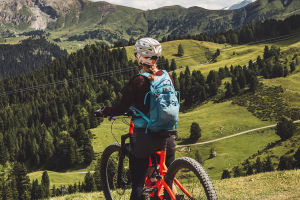
When we ride mountain bikes on natural trails, steep climbs and fast descents are part of the experience.
For all Lykkers who enjoy outdoor cycling, these sections often feel challenging but also exciting. The key is not only strength, but also body control, timing, and balance.
Modern mountain bikes can handle steep terrain quite well, but how we ride them makes a big difference. If we use the wrong posture or timing, uphill sections may become difficult to complete, and downhill sections may feel unstable.
In this guide, we explore practical techniques that help us ride with more confidence and smoother control on varied terrain.
Long Uphill Riding Position
When we face a long uphill section, body position becomes very important. We should bend our arms slightly and move closer toward the front of the saddle. This helps us transfer power more efficiently through the pedals while keeping our balance steady.
During climbing, we avoid pulling hard on the handlebars. Instead, our upper body stays relaxed so that most of the effort comes from our legs. A light grip helps us steer without wasting energy. At the same time, we keep our gaze forward instead of looking down at the front wheel. This improves direction control and helps us stay mentally focused on the path ahead.
A smooth rhythm is more effective than sudden bursts of force. When we maintain steady breathing and consistent pedaling, long climbs feel more manageable.
Steep Uphill Start Technique
Starting on a steep incline can feel tricky at first. We prepare by selecting an easier gear before we begin moving. This allows for smoother pedaling from the very first step.
At the start, we may stand slightly forward or sit lightly on the saddle. The main goal is to keep the bike upright and stable. Our chest moves closer to the handlebar, helping maintain front-wheel contact with the ground.
Balance is the key here. If we lean too far back, the front wheel may rise. If we lean too far forward, the rear wheel may lose grip. We aim for a centered position where both wheels stay stable.
Quick but controlled pedaling helps us build momentum without losing balance. The first few seconds often decide how smooth the climb will feel.
Sustaining Low Center on Climb
On very steep climbs, maintaining a low and stable center of gravity becomes essential. We may lift slightly off the saddle while keeping close contact with it. The chest moves forward and downward, and elbows stay bent near the body.
This posture helps improve tire grip on the surface. If we lean too far forward, the rear wheel may spin. If we shift too far back, the front wheel may lift. The best approach is a balanced middle position that adjusts naturally with the slope.
We also keep a steady cadence instead of forcing power. Looking ahead at the trail helps us stay focused and react early to changes. Even on demanding slopes, a calm rhythm is often more effective than rushing.
Downhill Speed Control Basics
When we enter downhill sections, controlling speed becomes the main focus. Before moving, we prepare by positioning one foot on the pedal and placing our hands on the brakes.
We gently apply braking to reduce speed at the beginning. Then we quickly settle onto the saddle and find a stable riding position. Once balanced, we gradually release the brakes and look forward along the trail.
Our pedals stay in a horizontal position, while our hips shift slightly backward. The upper body lowers to maintain balance over uneven ground. This helps us stay stable while riding through changes in surface conditions.
We avoid looking at the front wheel. Instead, we focus on the path ahead, which helps the bike naturally follow the correct direction.
Long Descent Relaxed Control
On long downhill rides, staying relaxed is very important. A tense body can cause faster fatigue and reduce control. When we stay loose, we absorb terrain changes more effectively.
We shift our hips slightly backward and bend our arms to help absorb impacts. Our weight stays centered over the pedals instead of the hands. If the body leans too far back with straight arms, steering becomes harder.
On smoother paths, we stay closer to the saddle. On rougher sections, we lower our upper body more and move weight backward slightly. Our eyes always scan the trail ahead to prepare for upcoming changes.
Instead of resisting bumps with strength, we allow the body to move naturally with the terrain. This creates a smoother and safer riding experience over longer distances.
Ride Smarter, Go Further
Riding steep climbs and descents is not just about power, but about skill, awareness, and rhythm. When we learn to adjust posture and control timing, challenging terrain becomes much more manageable.
For all Lykkers who enjoy mountain biking, the most important habit is to stay calm, keep looking forward, and trust the movement of the bike. With practice, each climb becomes smoother and each descent more controlled.
We hope these practical techniques help us all enjoy more confident rides on every trail we explore.