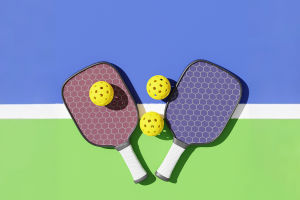
Holding a tennis racket for the first time can feel like holding a tool full of possibilities—and yet, one wrong choice can make every swing frustrating.
The racket you pick isn't just a piece of equipment; it shapes how you play, how comfortable you feel, and how much you improve over time. Finding the right balance of weight, grip, and string tension can transform your game.
Understanding Racket Weight
The weight of a tennis racket affects both control and power. Lighter rackets, usually under 10 ounces, are easier to maneuver, which is ideal for beginners or players who rely on quick swings. Heavier rackets, around 11–12 ounces, offer more stability and power but require stronger arm and wrist muscles.
To test the right weight, pick up several rackets and simulate a few swings as if hitting a ball. You should feel a balance between ease of movement and solidity at contact. For example, a beginner who struggles to control a heavier racket might find a 9.5-ounce racket perfect for learning strokes without straining their shoulder.
Choosing the Grip Size
Grip size determines how naturally the racket fits in your hand. A grip that's too small forces you to squeeze tightly, risking blisters and elbow strain. A grip that's too large makes it hard to twist the racket during volleys or spins.
To find your ideal grip, measure from the middle crease of your palm to the tip of your ring finger—this number in inches often corresponds to the recommended grip size. An actionable tip: if you're between sizes, choose the smaller option; you can always add an overgrip for extra thickness. For instance, a player switching from recreational to competitive play often upgrades to a slightly larger grip for better control without losing flexibility.
Head Size and Sweet Spot
The head size of a racket determines the sweet spot—the area that produces optimal ball speed and spin. Larger heads, over 105 square inches, give more forgiveness on off-center hits and more power, which helps beginners. Smaller heads, around 85–95 square inches, provide greater precision and control, preferred by advanced players.
An actionable example: a beginner struggling to hit consistently might choose a mid-plus head size around 100 square inches to get more clean hits and confidence during rallies. Meanwhile, an intermediate player focusing on spin and placement could opt for a slightly smaller head for accuracy.
String Type and Tension
Strings are often overlooked but greatly influence performance. Softer strings provide more comfort and spin potential, while stiffer strings give more control and power. String tension is equally important: tighter strings give precise shots but require more strength, while looser strings offer more forgiveness and a “trampoline effect” on the ball.
A practical tip: start with a medium tension around 50–55 pounds and adjust after a few weeks based on comfort and performance. For example, a player experiencing wrist soreness might benefit from slightly looser strings, which reduce vibration and stress during volleys.
Testing and Personal Preference
Even with all technical knowledge, personal feel matters most. Demo rackets whenever possible. Many clubs or stores allow you to hit a few balls with different models. Pay attention to how the racket feels during a forehand, backhand, and serve. Comfort, confidence, and ease of swing are just as crucial as specifications.
An actionable step: take notes on each racket's feel and performance. One player found that a racket slightly heavier than their previous one felt awkward at first, but improved consistency after a week of practice. This trial-and-error approach often leads to the best long-term choice.
Selecting the right tennis racket is more than matching numbers—it's about how the racket interacts with your swing, your comfort, and your style of play. The perfect racket supports your strokes, enhances your control, and helps you build confidence on the court. When you find that balance, every swing feels sharper, every serve more precise, and every game more enjoyable.